




Fewer protocol errors, faster cancer research
A single inconsistency in a clinical trial protocol can set a cancer study back for months. Together with EORTC, we built three AI tools that catch those errors before they reach a regulator. All three were tested on EORTC's own protocols, approved, and given the green light to continue.
The challenge
Solution
Approach
Outcome
01 — THE CHALLENGE
Small slips, big delays
The European Organisation for Research and Treatment of Cancer (EORTC) is a non-profit clinical cancer research organisation. For over 60 years its mission has been simple and serious: helping people with cancer live longer and better lives.
EORTC conducts independent, cancer clinical trials through a vast network of academic and local hospitals, collaborating with the healthcare industry where appropriate to develop and evaluate new cancer treatments while preserving its scientific integrity. Several of its studies have already changed clinical practice worldwide, from brain cancer to advanced prostate cancer.
At the heart of every clinical trial is the protocol. It sets out why the study exists, the scientific background, which patients qualify, the treatment schedule, the statistics, and the safety scenarios. A typical protocol spans over 100 pages, can take months to develop, and requires input from many experts working in parallel, making it one of the most complex and time-consuming documents in clinical research.
All of this takes place in a regulated environment, and the regulation is there for good reason: patient safety and scientific rigour are what is at stake. Once a protocol is finished it goes to an ethics committee or regulatory body in every country where the study will run, and each review cycle can easily take three months. If a mistake surfaces, the protocol has to be amended, and the clock starts again. The impact extends beyond a single document: every affected study material, including patient information sheets and consent forms, must be updated and officially translated again for each participating country. The result is added cost, administrative burden, and delays in bringing potentially life-changing treatments to patients.
'Every small, avoidable mistake can lead to months of delay.’
Bert Dhondt, clinical research physician EORTC
The frustrating part is how many of those mistakes are indeed preventable, simply because we are all human. Very often, protocol amendments originate from simple inconsistencies rather than scientific issues. A dose written as every two weeks in one paragraph and every fifteen days in another. A schedule in the text that does not match the table summarising it. Nothing to do with the science, everything to do with hundreds of pages being too much for any one author to hold in their head.
This is exactly the kind of problem a large language model is suited to. EORTC saw that, asked In The Pocket for help.
02 — FIXING IT FAST
Three tools in no time
We began by focusing on the work itself rather than the technology. Two workshops and a round of stakeholder interviews surfaced seven to ten possible use cases. We narrowed those to the three with the best balance of value and effort, and deliberately left the most ambitious ideas, like handing a whole protocol to a chatbot, out of scope. In a field this sensitive, the responsible move was to start where we could add value with confidence and keep a human in the loop throughout.
We delivered three working tools:
We built all three in a short window, and that speed came from how we work. Using Anthropic's Claude Code, we set up a sandboxed environment, gave it our own front-end and back-end boilerplate alongside the stakeholder interviews and workshop notes, and refined the work into tickets. A team of agents then built against those tickets while we reviewed and steered. This is work that used to mean one iteration of one use case on the same budget, with a throwaway interface. With agents building at a scale and speed we could not reach before, EORTC got three tested tools with an interface that already looked professional. We couldn’t have done this without Claude on our team.
(And like any good team player, Claude respects the house rules. It is used in accordance with EORTC's data protection, privacy, and information security policies to safeguard confidential and personal data.)
03 — NOTHING LEFT UNCHECKED
A second pair of eyes that never tires
The value lives in the consistency engine, and it comes down to a second pair of eyes that never gets tired at page 200.
The Opus models are strong enough to take an entire protocol, hundreds of pages, in a single pass and reason across all of it at once. That is something a person reading line by line, or even a colleague reviewing the draft, cannot reliably do.
Inconsistencies will always slip past even a careful team. When Bert ran the checker over submission-ready protocols, it still surfaced around twenty each, a few of them significant.
Every one of those is a mistake that would otherwise risk an amendment, another three-month review cycle, another round of translations, and months lost before a treatment reaches the people waiting for it.
04 — IN SYNC
Side by side
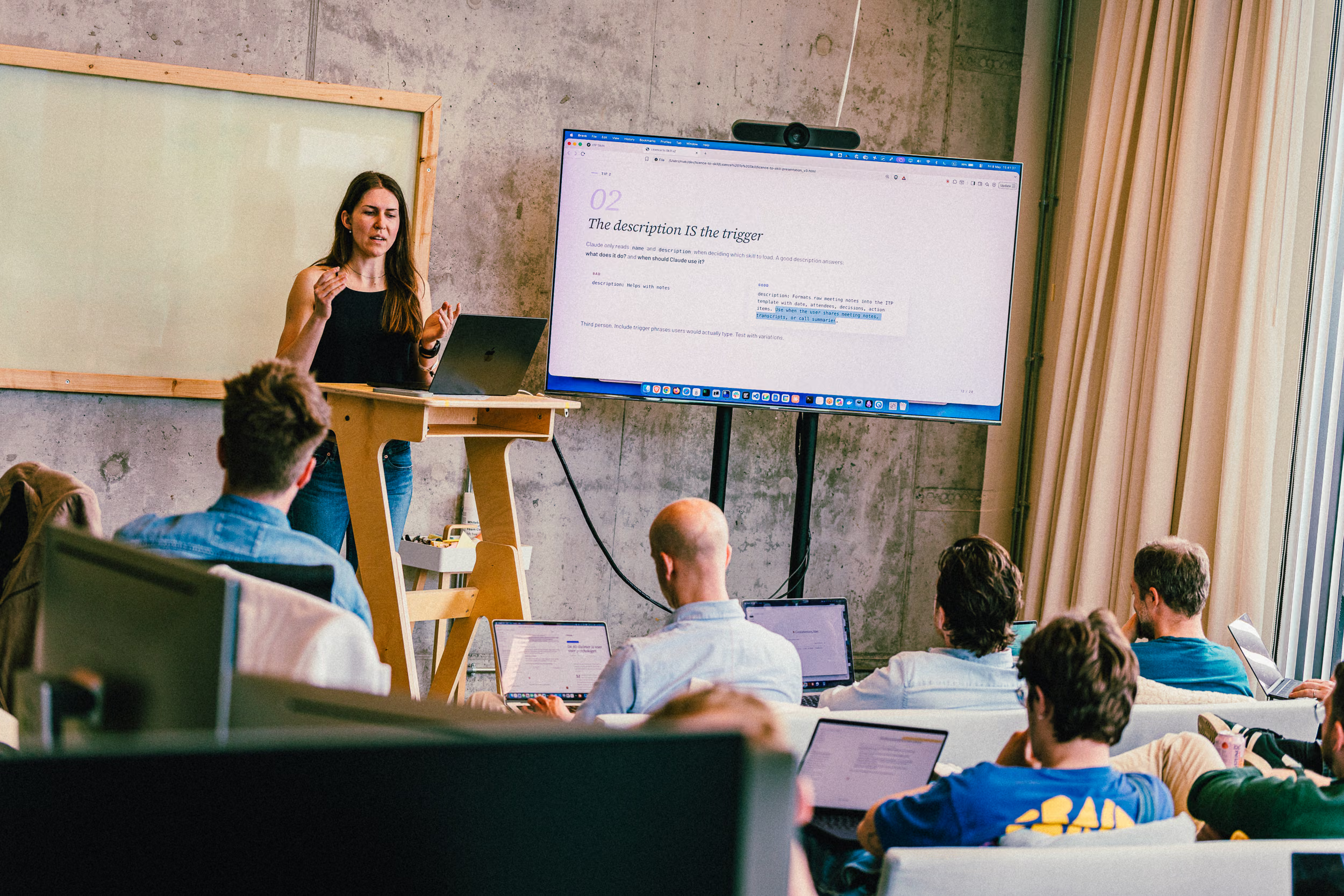
Clinical cancer research was a new field for the team, but it did not stay unfamiliar for long. EORTC brought the medical and scientific depth, we brought the product and AI craft. And it took only a brief run-up to find a shared language. From there the collaboration moved quickly, and within a limited time we had three working tools, now in use.
We also kept the reality of the organisation in view. Adopting AI in a regulated medical setting is a gradual process, and not everyone starts in the same place. The goal was never to overturn how EORTC works overnight, but to improve the existing process step by step, prove the value, and bring people along. Keeping a human in the loop at every stage was central to that, both for safety and for trust.
The pilot did what it needed to do: it validated the value. EORTC has taken all three tools to integrate them into their own environment, and there is a clear path forward to make them a natural part of the daily workflow. With these first use cases proven, EORTC is already thinking about what comes next: how much further this can go, and whether protocol work could become fully agentic, where a single change flows through to every linked document on its own, with a person verifying the result.

.avif)
Fulfill your ambitions
We'd love to hear about your next challenges. Let's take the first step towards achieving your business goals. No strings attached.
Let's chat